
Dreid works the way many ambitious product teams want to work: start with a concrete idea, turn it into a working system, and learn from the result quickly. The difference is that Dreid is using Computer Agents not only as a chat interface, but as an execution layer for real product work.
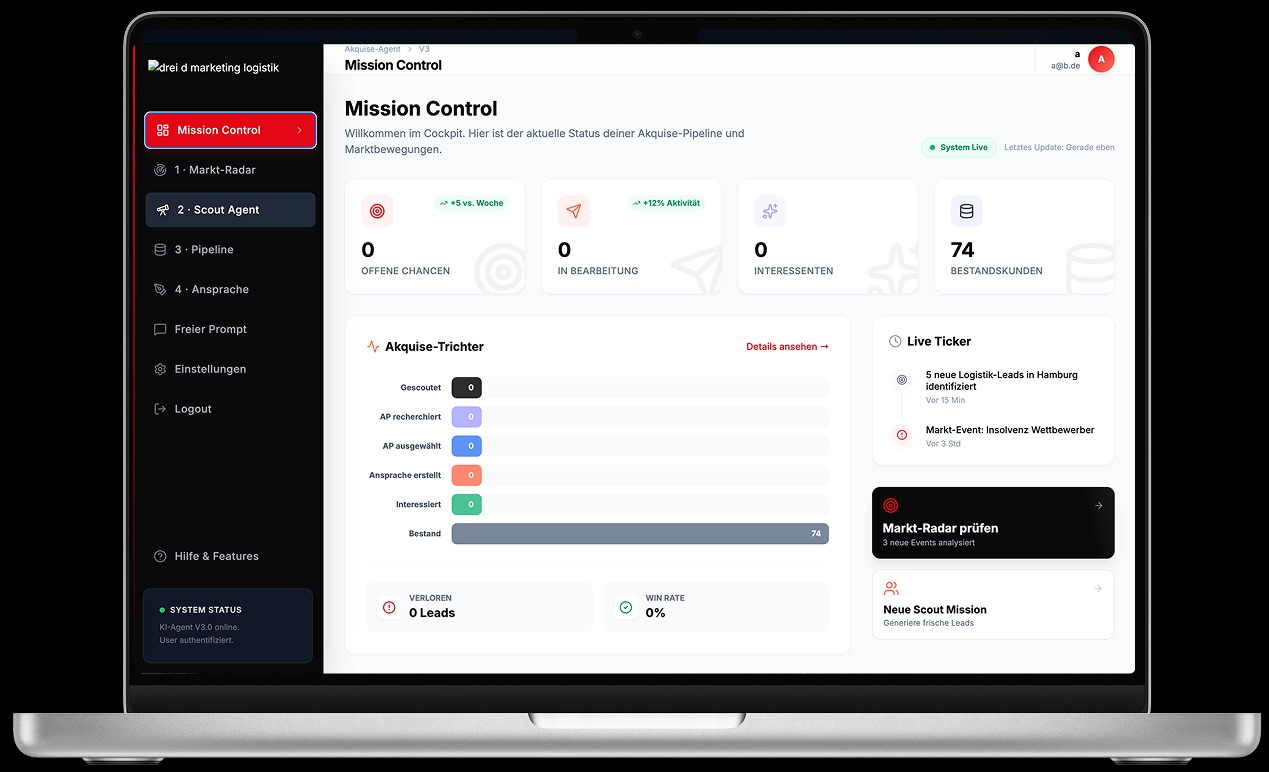
Inside Computer Agents, Dreid can describe a new application concept, let agents break it down into project tasks, create resources such as web apps, functions, and databases, then continue iterating inside the same persistent workspace. One result is the Akquise Agent, a hosted application that was developed and deployed through Computer Agents resources.
From idea to hosted prototype
For Dreid, prototyping is not just about generating a mockup. A useful prototype needs a live URL, backend logic, data storage, and enough structure that the team can decide whether the idea is worth taking further.
Computer Agents gives each project a shared operating surface: tasks, releases, files, comments, cloud computers, and deployment resources. Agents can inspect the existing work, create the missing pieces, and keep moving the project forward without losing context every time a new run starts.
That matters for app ideas like the Akquise Agent, where the deliverable is not a static demo. The system needs hosted UI, server-side behavior, and a deployable resource that can actually be opened and tested.
Why persistent project context changes the workflow
In a normal AI workflow, a team often has to restate the plan, paste the relevant files, remind the model what was already tried, and manually connect the output to deployment. Dreid uses Computer Agents differently: the project itself becomes the memory.
A Computer Agent can see the project plan, the tasks, the prior agent runs, and the resources attached to the project. It can work inside a cloud computer, edit files, create functions, connect a database, and deploy a web app. The human team stays in the loop where judgment is needed, but the repetitive execution steps can move faster.
“The important shift is that agents are no longer producing isolated suggestions. They are working inside the same project system where the actual app, tasks, files, and deployments live.”
Computer Agents resources as the prototyping stack
Dreid is using the resource layer of Computer Agents as a practical stack for new application ideas. Web Apps provide the hosted frontend. Functions provide backend behavior. Databases make prototypes stateful. Projects give agents the work management layer needed to plan, execute, review, and continue.
This is especially useful when a prototype needs to become more than a proof of concept. If an idea works, the same workspace can keep accumulating decisions, deployment notes, tasks, and follow-up work instead of being thrown away after the first demo.
The Akquise Agent example
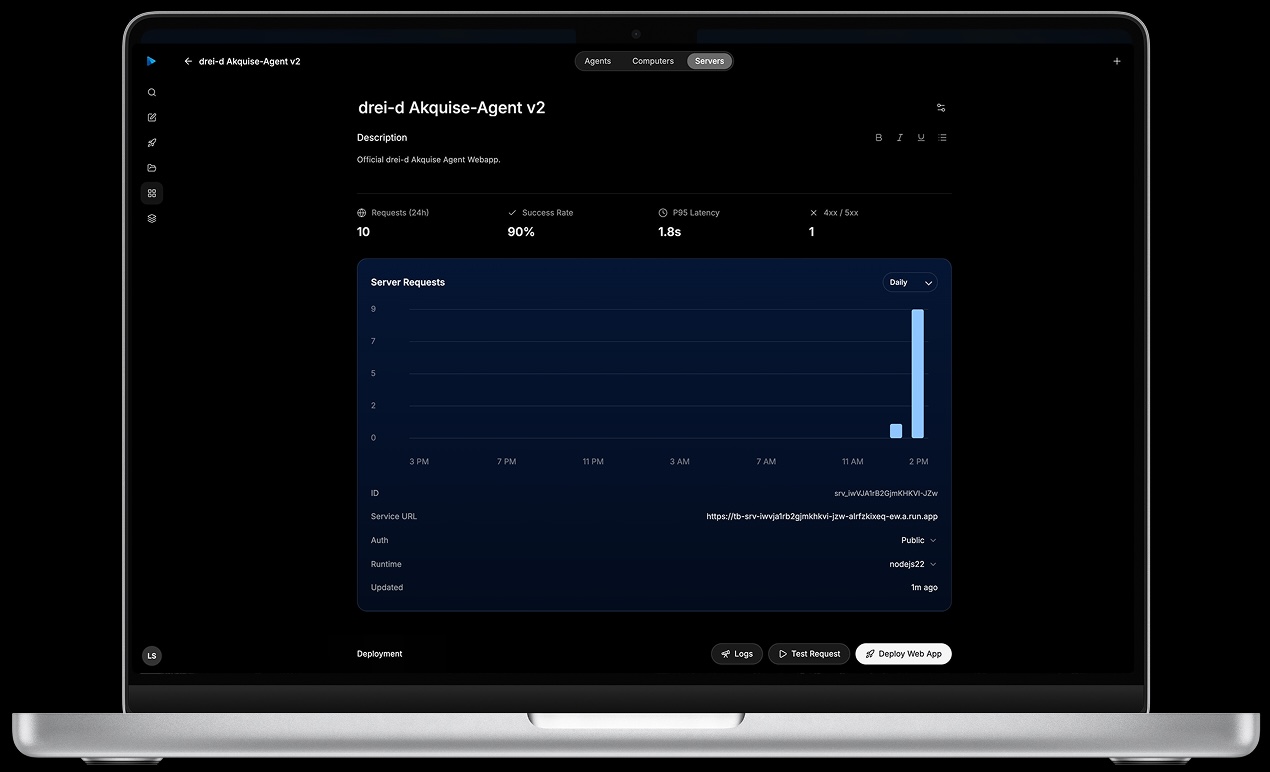
The Akquise Agent is a concrete example of this workflow. It is hosted as a Computer Agents web app and available at a live URL, which means Dreid can evaluate behavior in the browser instead of reviewing only generated code or screenshots.
That live deployment changes the feedback loop. The team can open the app, test the workflow, add new tasks, ask an agent to improve the implementation, and use the same project context to continue from there.
Open the live Akquise AgentWhat this makes possible next
The Dreid story is a preview of how product teams can use agents as a real execution layer. A project can start as a short idea, turn into tasks, become hosted software, and continue evolving with agents that remember what already happened.
For teams that explore many ideas, this changes the cost of trying. More concepts can reach a real testable state. More deployment work can happen inside the same system. And the strongest ideas can continue from prototype toward production without rebuilding the context from scratch.